
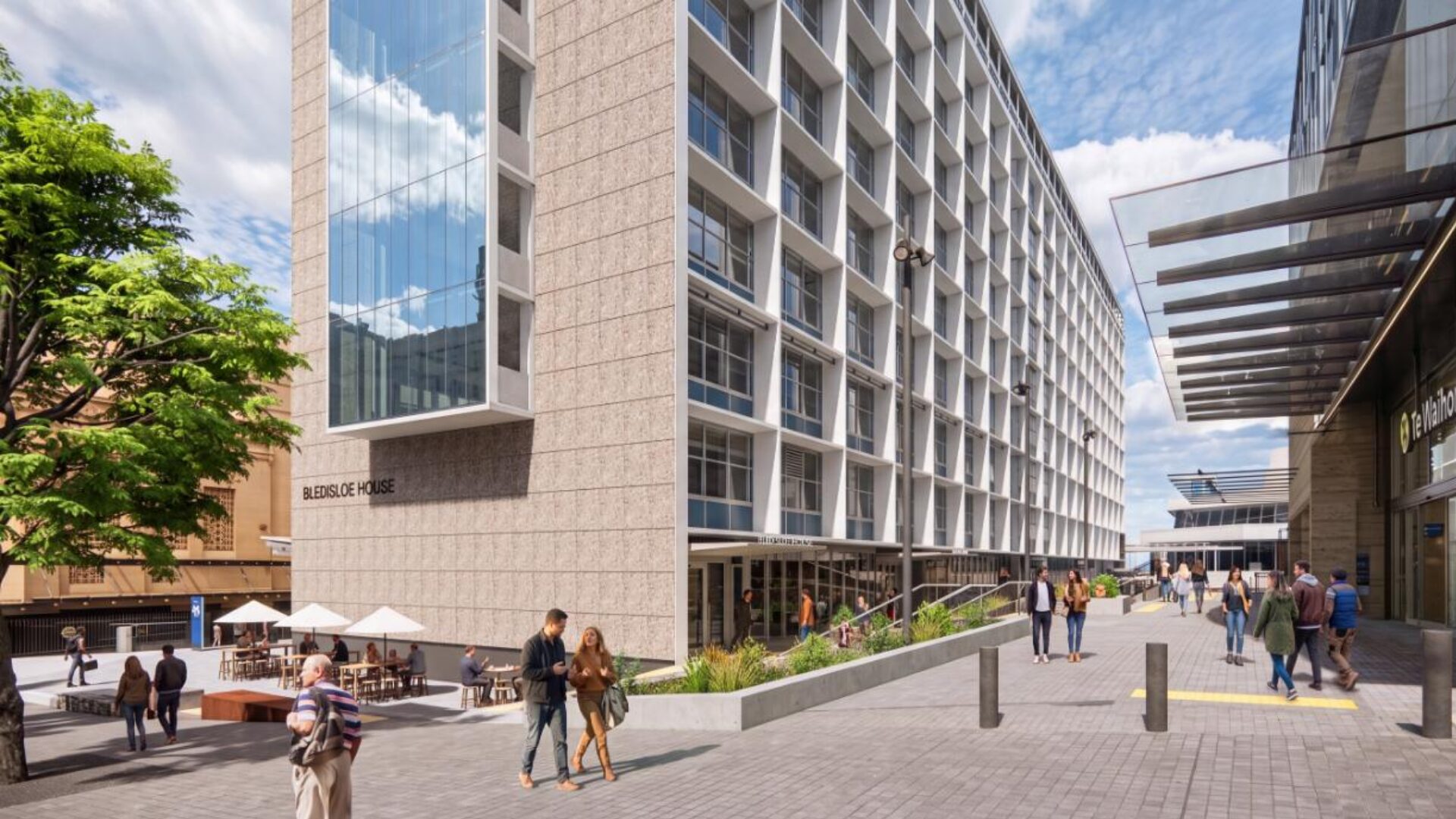
EST 1959/2026
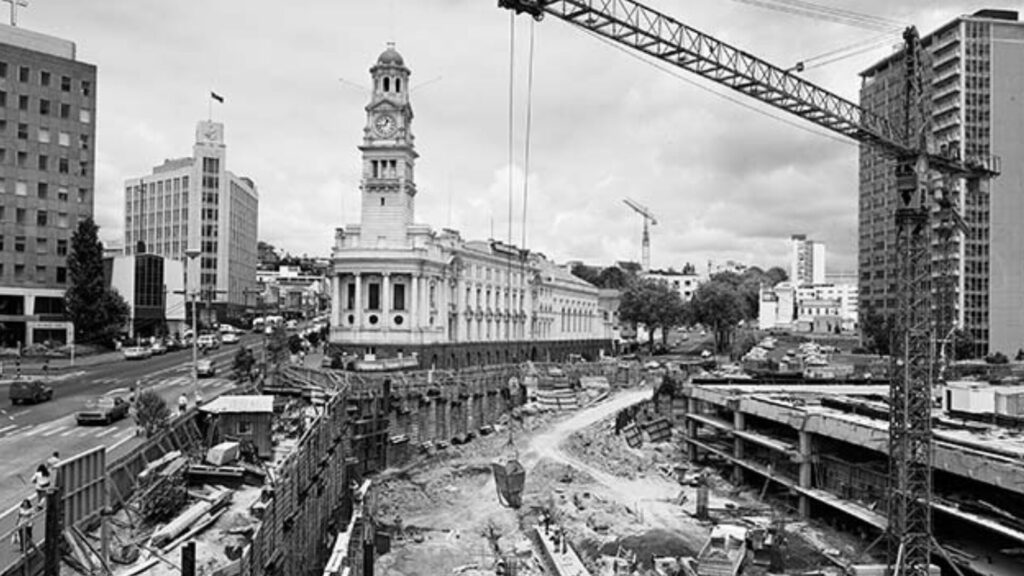
c. 1985 / Aotea Square, Auckland
Aotea Centre under construction beside Auckland Town Hall, showing the Midtown civic precinct during a major period of redevelopment.
Before Midtown became one of Auckland’s fastest-evolving precincts, Bledisloe House was already part of the city’s heritage.
Located at 24 Wellesley Street West beside Aotea Square, the building opened in 1959 and has overlooked almost every major chapter in Auckland’s civic evolution. It arrived as the city expanded after the Second World War, stood through decades of government use, witnessed Aotea grow into the country’s largest arts and culture precinct, and now finds itself beside the biggest transport project in New Zealand’s history.
Few buildings have occupied the same place, physically and culturally, for so long.
To understand the next chapter of Bledisloe House, it helps to look at what was here first: the civic plan that shaped it, the artwork built into it, the precinct that grew around it, and the city now moving towards it again.
It Was Never Meant To Stand Alone
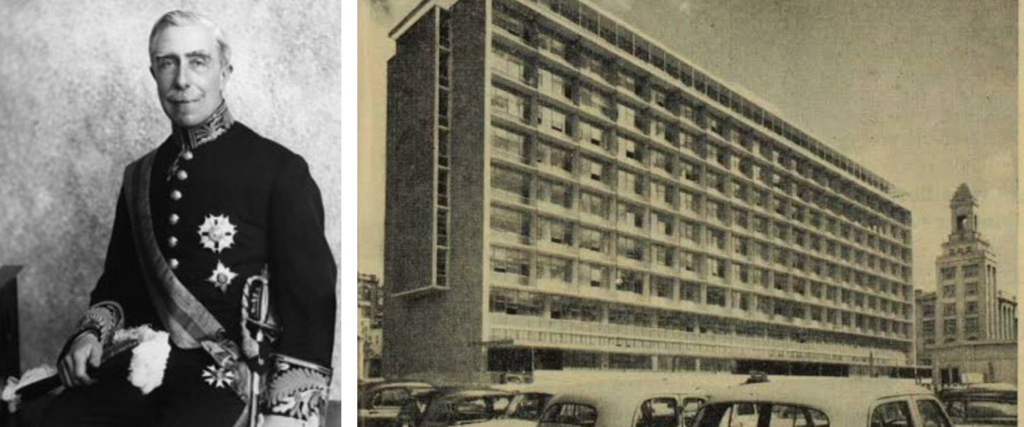
Left to right: Charles Bathurst, 1st Viscount Bledisloe, Governor-General of New Zealand (1930–1935). Bledisloe House, Auckland, completed 1962.
Bledisloe House was designed by Francis Gordon Wilson with Douglas Jocelyn Beere and named after Lord Bledisloe, Governor-General of New Zealand from 1930 to 1935.
But the building was never intended to be a one-off.
It was the only completed structure from an original proposal for eight identical government buildings planned for Auckland’s civic centre. The wider scheme was never delivered, leaving Bledisloe House as the surviving piece of a much larger vision for this part of the city.
Long Before It Was Called Midtown
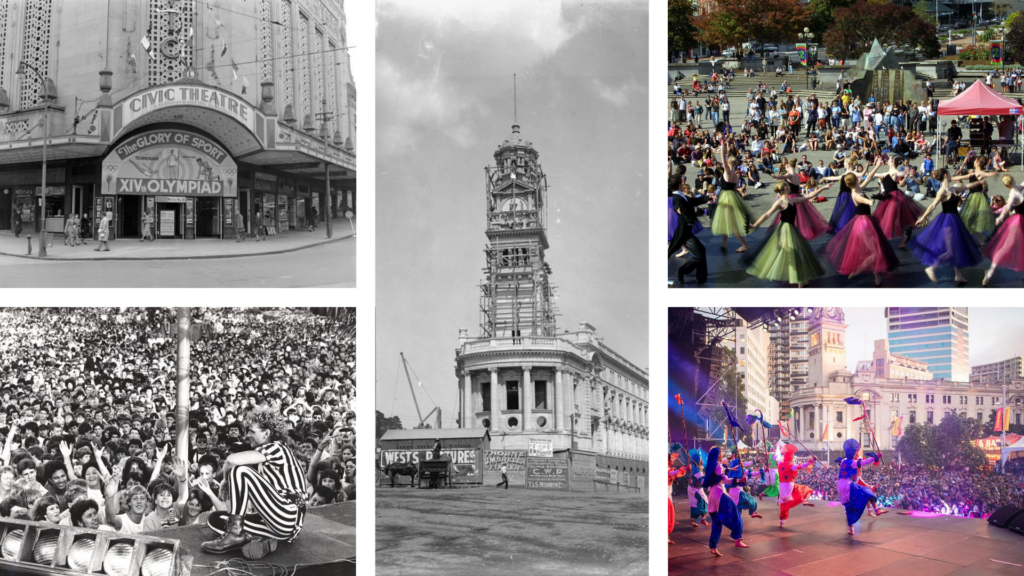
Clockwise from top left: The Civic Theatre on Queen Street during the late 1920s; Auckland Town Hall under construction, c.1909–1911; cultural performance in Aotea Square; community festival in Aotea Square; free concert crowd in Aotea Square, c.1984; illustrating the precinct’s long history as one of Auckland’s civic and cultural gathering places. Images: Auckland Libraries Heritage Collections and other historical archives.
Bledisloe House wasn’t built where the city happened to grow. It was built where Auckland already gathered.
Long before the building opened, this part of the city was already taking shape as Auckland’s public meeting place. Aotea Square was once home to the city’s markets, while the site chosen for Auckland Town Hall in 1908 helped establish the area as a centre for civic life.
Over the decades, theatres, public institutions, libraries, and galleries gathered around it, creating one of the country’s richest cultural precincts. Today, Auckland Town Hall, The Civic, Aotea Centre, Auckland Art Gallery Toi o Tāmaki, Q Theatre, Basement Theatre and Auckland Central City Library all sit within a short walk.
The neighbourhood has always been more than an office district. It is where Auckland comes together to celebrate, debate, perform, and connect.
Above The Skyline
![Guy Ngan’s Untitled [Bledisloe House Frieze]](https://alberts.nz/wp-content/uploads/2026/07/Narrow-Landscape-EDM-2026-07-06T094917.857-1024x427.png)
1956 / Bledisloe House, Auckland
Guy Ngan’s Untitled [Bledisloe House Frieze], a glass mosaic frieze commissioned for the rooftop of Bledisloe House, shown in archival and contemporary detail.
One of Bledisloe House’s most significant heritage features sits above the building.
Created in 1956, Guy Ngan’s Untitled [Bledisloe House Frieze] wraps around the penthouse in glass mosaic, with panels measuring up to 12.6 metres long. Today, the work forms part of the Auckland Council Art Collection.
The frieze reflects a different approach to public architecture. During the 1950s, artworks were often commissioned as part of the building itself, with artists and architects working together from the beginning. Rather than decorating the finished building, the artwork became part of its identity.
Nearly seventy years later, the Frieze remains in place, overlooking the same streets and public spaces for which it was created.
The City Is Moving Towards It Again
The next major shift is still ahead.
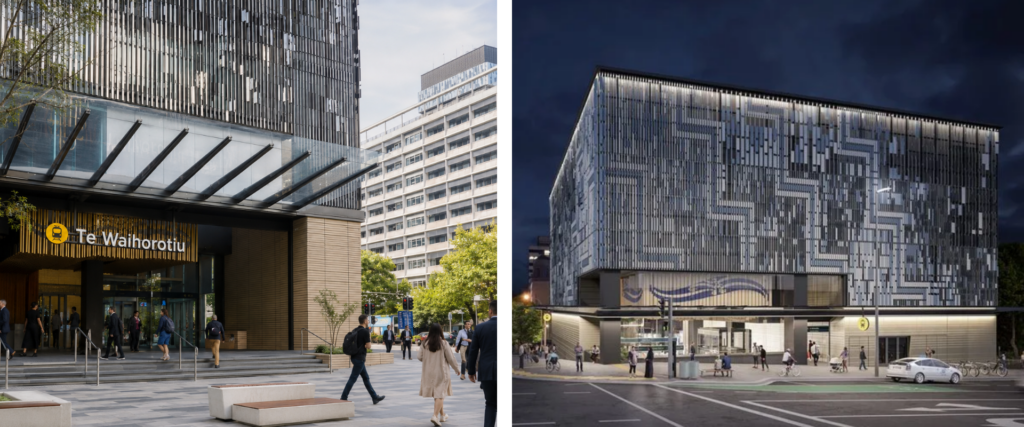
The City Rail Link is one of the largest transport investments in Auckland’s history, with a total project cost of around $5.5 billion. When Te Waihorotiu Station opens, just metres from Bledisloe House, it is expected to become New Zealand’s busiest train station, with the wider CRL network designed for capacity of up to 54,000 passengers per hour.
That changes the future of this part of the city.
More people will be able to move into the centre with greater ease, bringing new foot traffic through Wellesley Street, Aotea Square, Queen Street and the surrounding laneways. The timing also reflects a broader workplace shift, with Studio DB’s 2026 Office Occupier Survey showing most organisations are now working from the office three to five days a week, while fully remote models are becoming increasingly rare. As in-person connection, collaboration and client hosting become central to the office again, the value of a highly connected city address becomes stronger.
The change extends beyond the station. Wellesley Street is being redesigned, Bledisloe Lane has been transformed into a brighter, more pedestrian-friendly connection, and new public spaces, hospitality venues and private developments are changing how people will use the area throughout the day.
The Next Life Of A Landmark
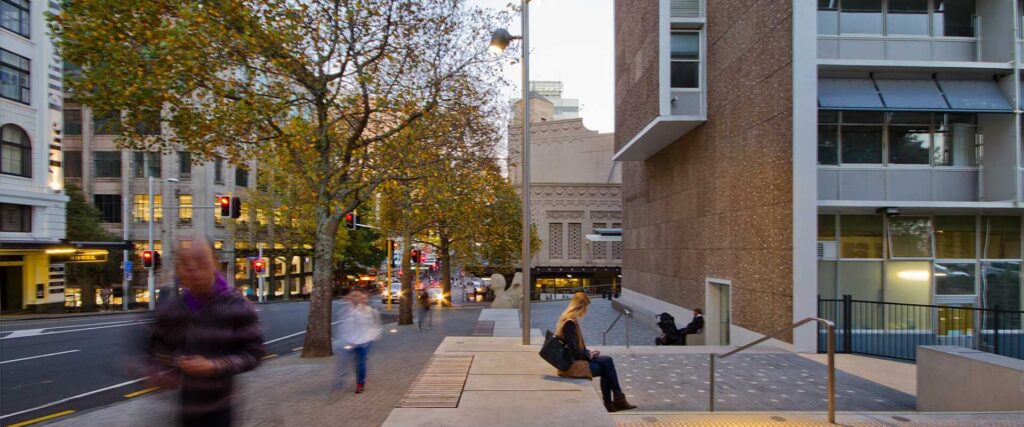
Bledisloe House follows the approach Alberts has always taken: work with the value already there.
The heritage-listed modernist structure is being restored and adapted into nine levels of character office space, with the upper floors reworked for a more textured, contemporary workplace. While the ground floor is being opened back to the city, bringing new dining, hospitality, and retail to street level, and reconnecting the building with Bledisloe Lane, Wellesley Street, and the wider precinct.
What Comes Next
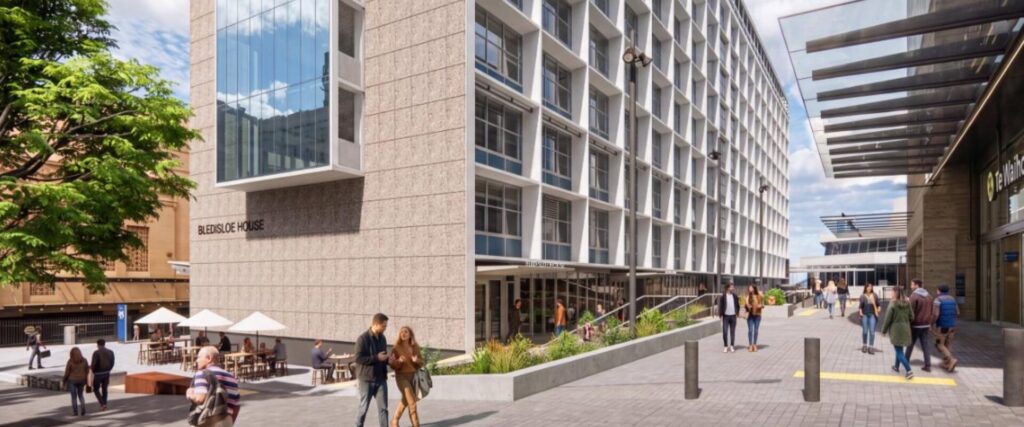
The first businesses to join Bledisloe House will become part of its story at the point it begins again.
They will arrive as a heritage landmark reopens beside one of Auckland’s major arts precincts, at the same time Midtown enters its biggest period of transformation in decades.
Every building develops its own culture over time. The next one will be shaped by the people who arrive first: how the spaces are used, how the community grows, and how Bledisloe House is experienced for years to come.
Auckland knows this building. What comes next will be shaped by the businesses that make it their own.
Subscribe for updates about Bledisloe House
Be among the first to hear the latest updates on Bledisloe House, the newest addition to the Alberts portfolio.